The story behind "La esperanza nos está matando"

My father had so little time with his parents: He lost his mom as a young child, and his dad when he was just 21.

As a kid for me some 20-30 years later, l never fully appreciated how difficult that was for my father. How many birthdays and death days passed that weighed heavy on his heart while I was wholly ignorant of his grief.

He’d talk about them from time to time though. Mostly sad stories that pointed to a rough childhood, but he’d also talk about how he wished his dad had gotten to meet my siblings and me. He talked about camping trips “up north” that were the highlight of his youth. And he’d talked about these videos that he and 2 of his brothers (and occasionally their father) had shot with an old 8 mm camera that were stowed away in his youngest brother’s basement. He’d sometimes bemoan the lack of photos of his parents — he only had one of his mom and 2-3 of his dad — and said he hoped to one day show me those reels.

But years passed. Decades, even. And he never got to show them to me.

Fast forward to 2020 when our whole world fell apart. After losing my father slowly for years to a devastating neurodegenerative disease, we lost him altogether in 2020 right as we were ramping up a fight to get my mom on a transplant list. She fought valiantly in the midst of a global pandemic; beat the odds; and made the list. And yet just six months after we lost my father, we lost her, too.

And nestled between their two deaths — the bookends of an unfailingly cruel year — was the loss of my father’s youngest brother.

We suffered through these losses, and more, at a time when the world was shutdown. At a time when funerals were delayed, and all potential outlets to distract from our grief were closed or unsafe, particularly as one doctor told me a trauma-induced illness I developed following the loss of my parents put me at an elevated risk.

But then, some light: My cousin found those old reels when going through her father’s things and took it upon herself to digitize them by hand. And when she was finished, she did something that was especially kind: She put copies onto thumb drives and sent them to all of the cousins. That 2-inch piece of plastic became the most precious gift.

For the first time in my life, I could see the home videos my father had talked about. And the thing that surprised me the most — the thing that made me the happiest — was seeing all of the love that had been part of his family life. I could see his own father laughing and smiling and walking and skating. I could see many of his siblings (and his own grandmother!) coming together for a high school graduation party. I could see his father pretending to cry as he waved him away to college. I got to see inside his childhood home and rode along with him on some of those trips up north. And much to my surprise, the reels spanned longer than I realized and even included his courtship and subsequent marriage to my mother. A trip to the zoo with my brother and sister as small children (a few years before I made my grand entrance into the world) was the last of the reels.

I watched one video after another awash with contradiction: sadness and joy, grief and celebration. Clarity to see some of my dad’s stories come to life; confusion at the numbers of faces and places I didn’t recognize. I was beyond elated to finally get to see these reels and yet: Devastated that my father wasn’t watching them with me.

But even beyond my family connection to these videos, there was something that resonated with my inner photographer: A certain artistry in how they captured angles, motion and light. A celebration of family, this planet, and life. A living, breathing history of a bygone era.

I asked my husband, who was midway into recording an album that was spurred by the loss of my parents in the midst of the pandemic, if he was working on any songs where these reels “fit.”

He responded “yes” without pausing and told me more about the song: “La esperanza nos está matando” (“The hope is killing us”). As he finished work on it, I set about taking 2+ hours of footage that spanned nearly 2 decades and whittled it down to 4 minutes and 40 seconds. It was no easy task — there is so much wonderful footage — but I kept my focus on the song, and the pacing, and with time it all fell into place.

And in more ways than one, honestly: My parents had been so proud to be featured on the cover of my husband’s first album. My dad often wore the shirt bearing an illustration of the cover, and they had the bumper sticker proudly displayed on their car. They mostly listened to 60s rock and country music and only my father spoke Spanish and yet: They loved that little Spanish-language shoegaze album and were among my husband’s biggest fans.

Featuring them in the video for a song about their loss, on an album dedicated to them, just made sense. And yet the video isn’t just for them: It’s for all of those we have lost and those, like my father’s parents, that we never got to meet. It’s for the family and friends who endured these losses with us.

And for those beyond our circle: The ones who marvel at the passage of time. The ones who trudge through the bitter to lap up the sweet. The ones that live and breathe the melodies of the world: The discordant — and the harmonious.


Mending

When I was a kid, nearly all hobbies and sports were still divided into gendered buckets. Boys played baseball, girls played softball. Boys wrestled, girls played volleyball. Etc.

I was upset I couldn’t wrestle or play football on an actual team and tended to resent other traditionally feminine hobbies and proclivities being forced upon me.

That went double for sewing. I recall my mother offering to teach me on more than one occasion, and me refusing with nary a thought. “One day you’ll wish you knew how,” she threatened. I don’t recall my response, but it almost certainly involved a scoff or an eye roll. Maybe both.

At one point she even took me to a family friend’s house and had her try to teach me how to use a sewing machine. I don’t recall how I handled the interaction: There are just vague memories of sewing patterns and mind-numbing boredom.

I did, at least, agree to learn how to repair wayward buttons, which has been my sole specialty. It’s sufficed but I’d be lying if I didn’t admit: My mom was right. I’ve often found myself wishing I had (and knew how to use) a sewing machine.

My daughter – much like me to my mother – is very much so my opposite (“complement” might be a less antagonistic way to phrase it). Whatever I try to teach her, she rejects. And whatever I don’t know how to do: She develops a passionate interest in.

Two summers ago she went to an art camp where she was taught the basics of using a sewing machine, and she’s been begging for one ever since. We finally got her one this past Christmas, only to be hit with the hard reality: She didn’t know how it set it up, and I hadn’t the foggiest idea where to start. Because I was too busy being contrarian as a kid to just… listen. I regret that now.

It took us half a day of watching videos to figure it all out: What a bobbin is. How to set them up (there are two?!) when sewing. How to thread the needle once it’s on the machine. And about a gazillion other things. By the time it was ready for her first project, I half-understand the basics – and felt like I’d unlocked the universe.

In the weeks since, the vent in our dryer broke mid-cycle, and various clothes and linens got stuck. Some were torn to the point of ruin. Some have little holes we’re turning a blind eye to. But some – like this napkin – were somewhere in-between, and we had to made a decision: Fix it or toss it.

So out came the sewing machine and with it: My first-ever project. A homemade patch.

It isn’t perfect, and it took me so long to finish I’m convinced it would’ve been faster if I’d done it by hand. But I’m proud of this little patch. It doesn’t match the linen, not even close, but that’s OK. It’s a reminder that it can take a decade or two (or three) before the lessons your parents teach you really catch up to you.

In that, and many other ways, I’m still learning.

The Search for Aurora Borealis: How to See the Northern Lights in Chicagoland

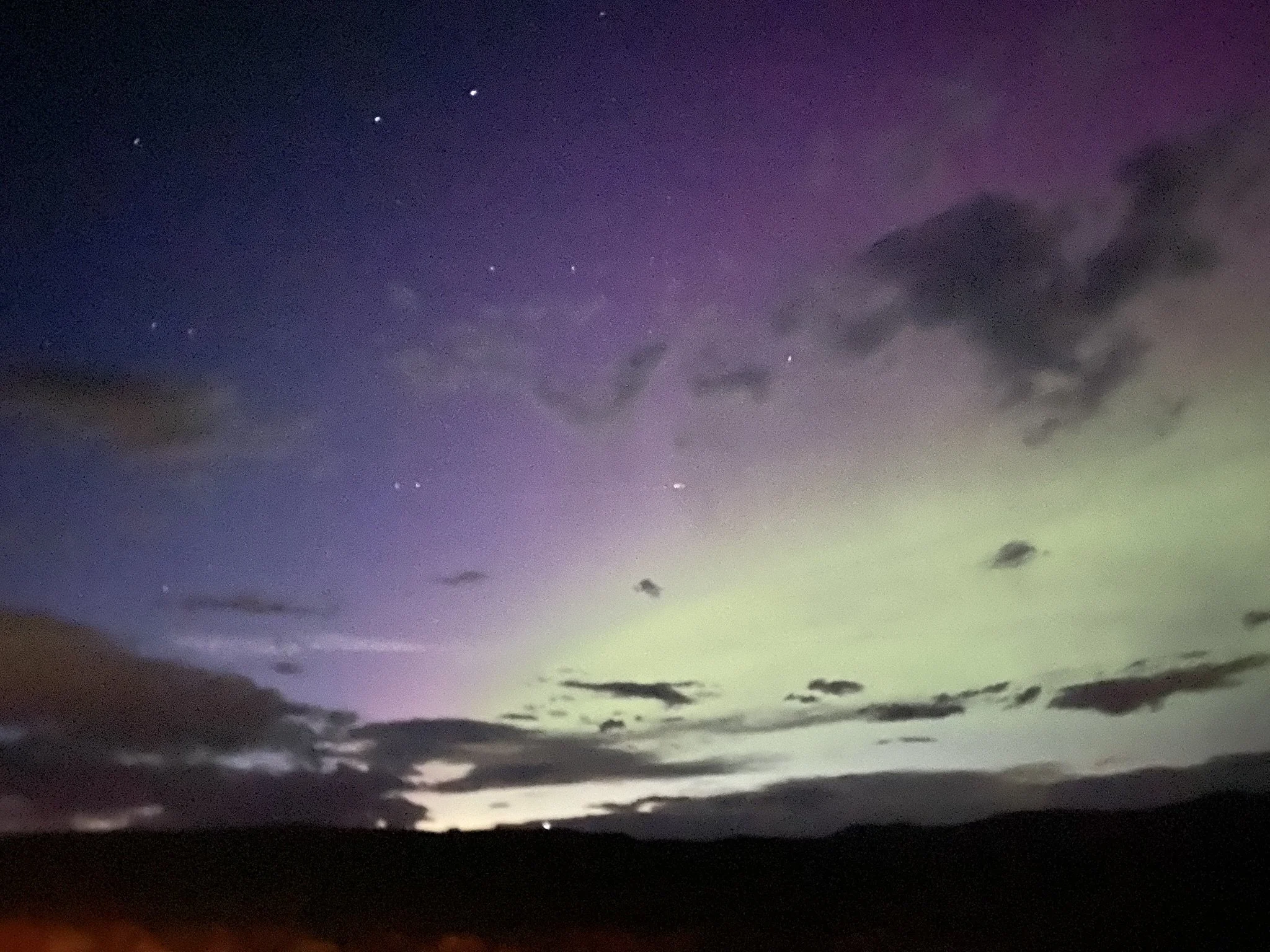
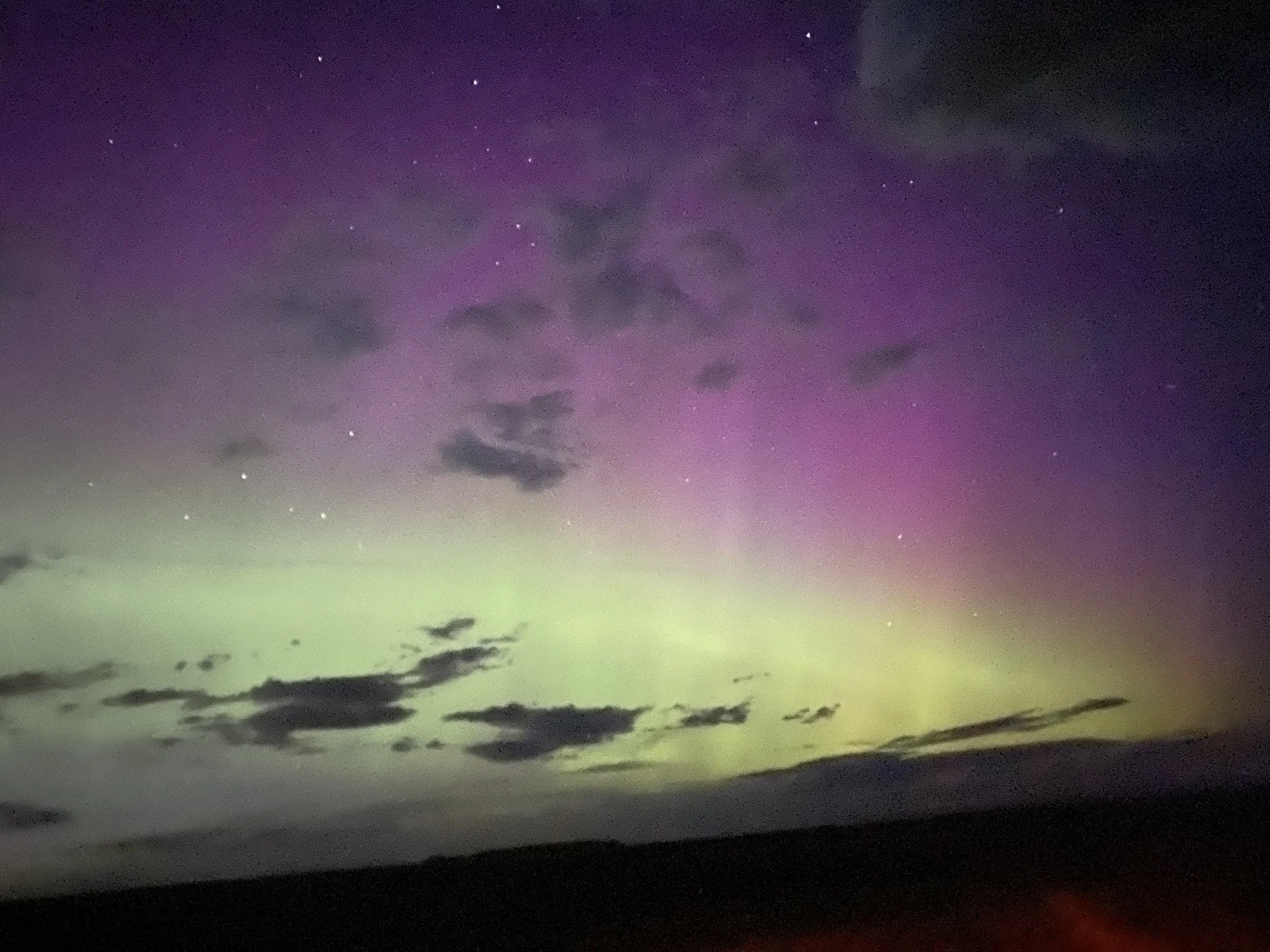
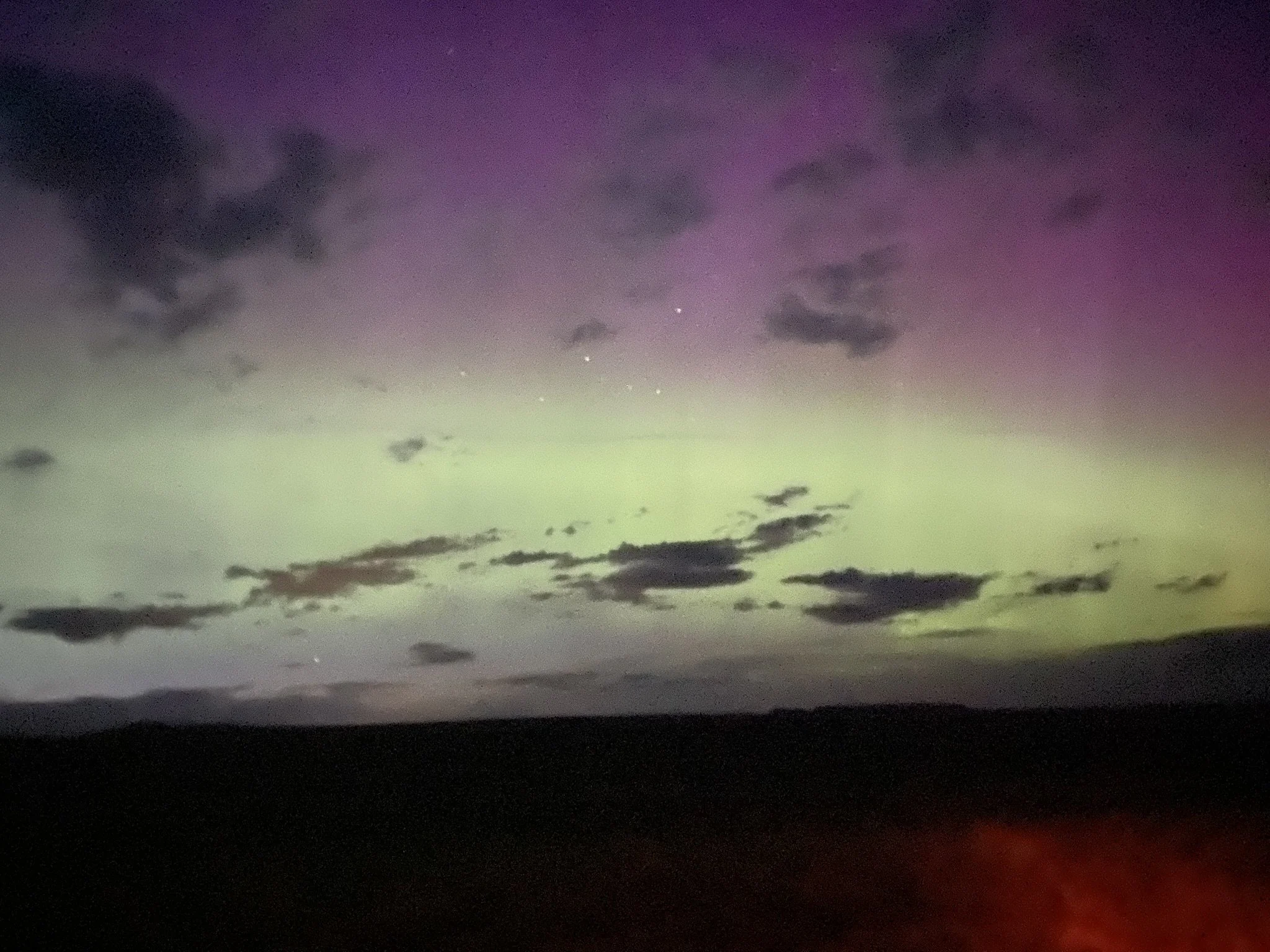
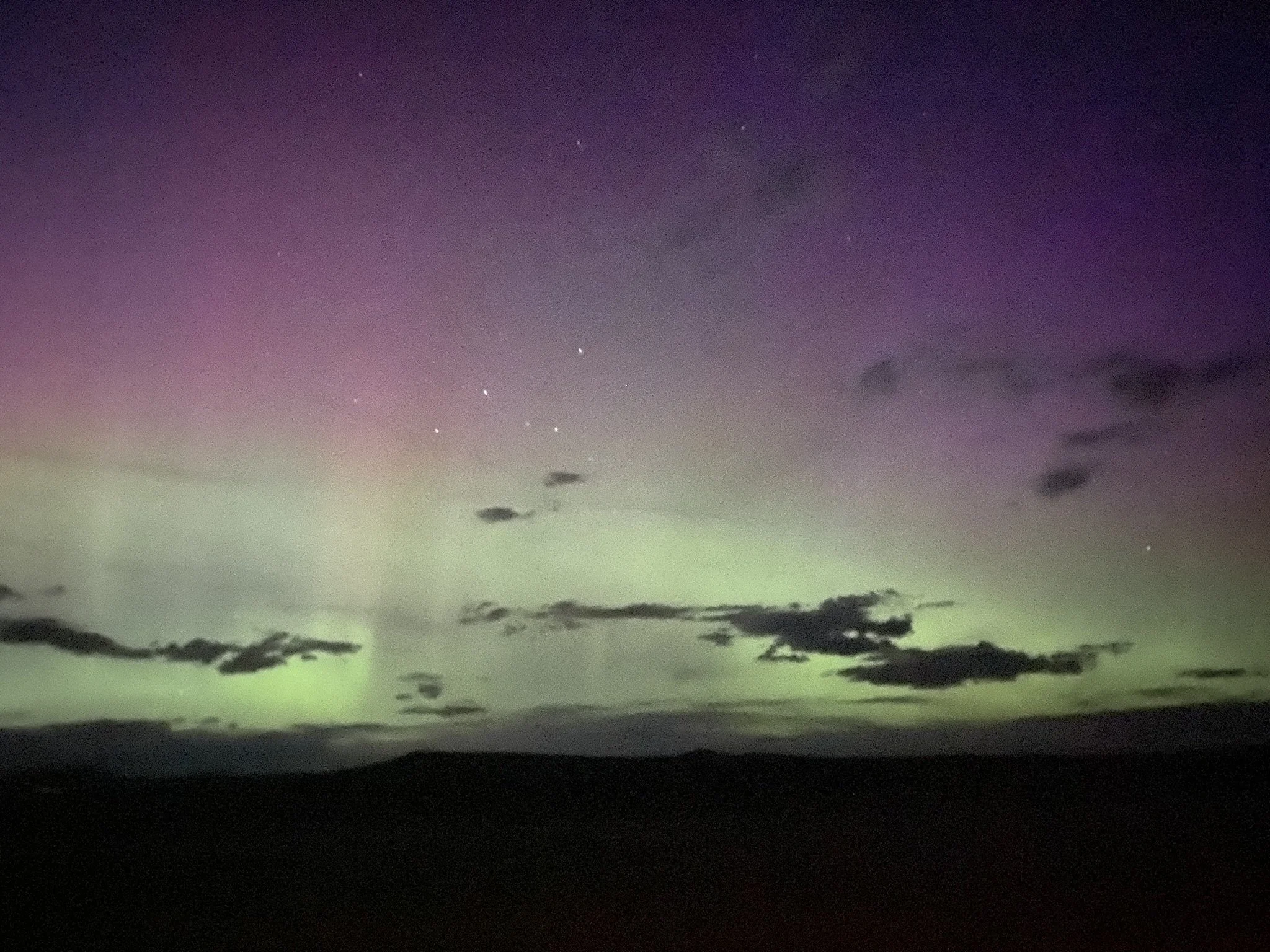
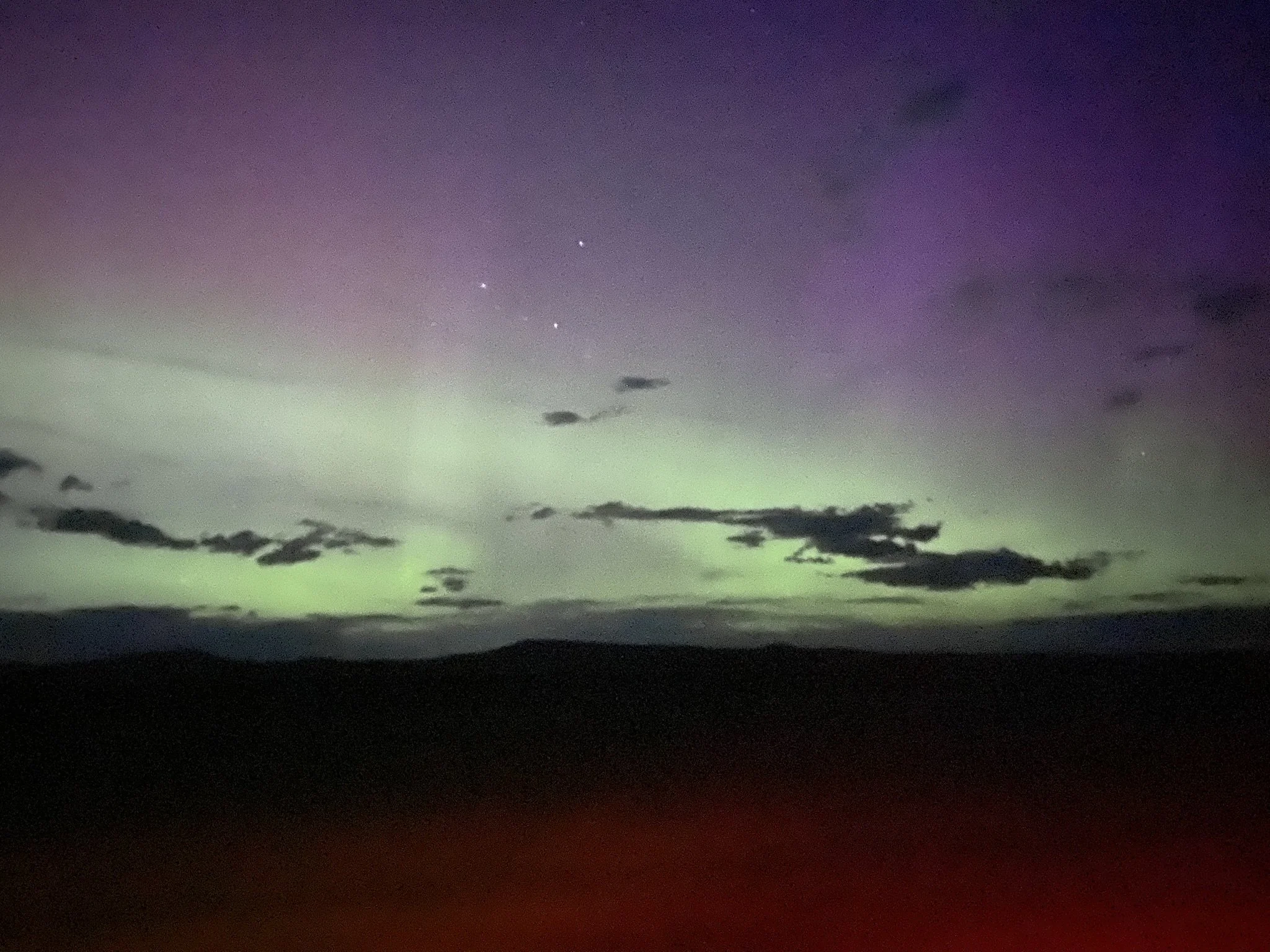
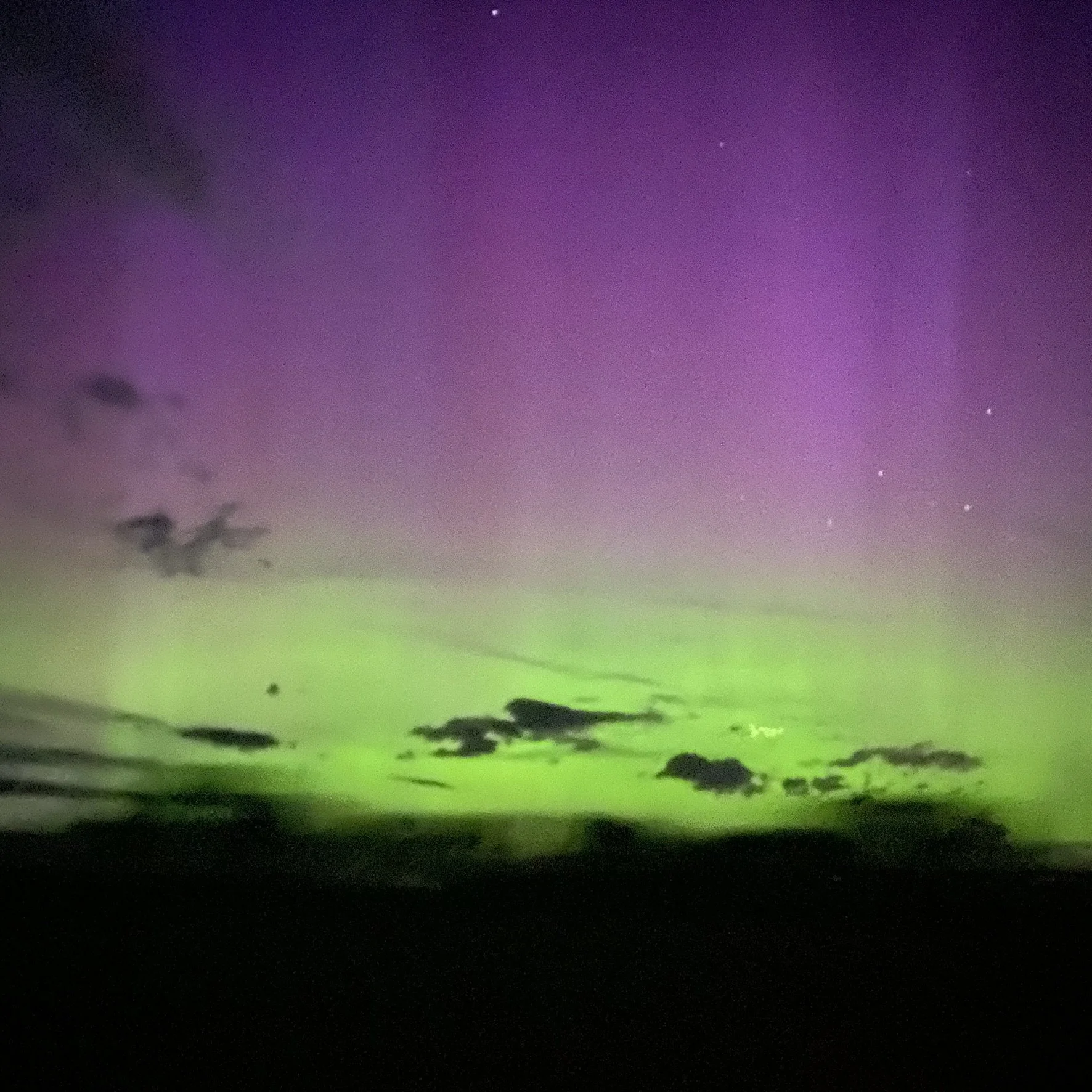
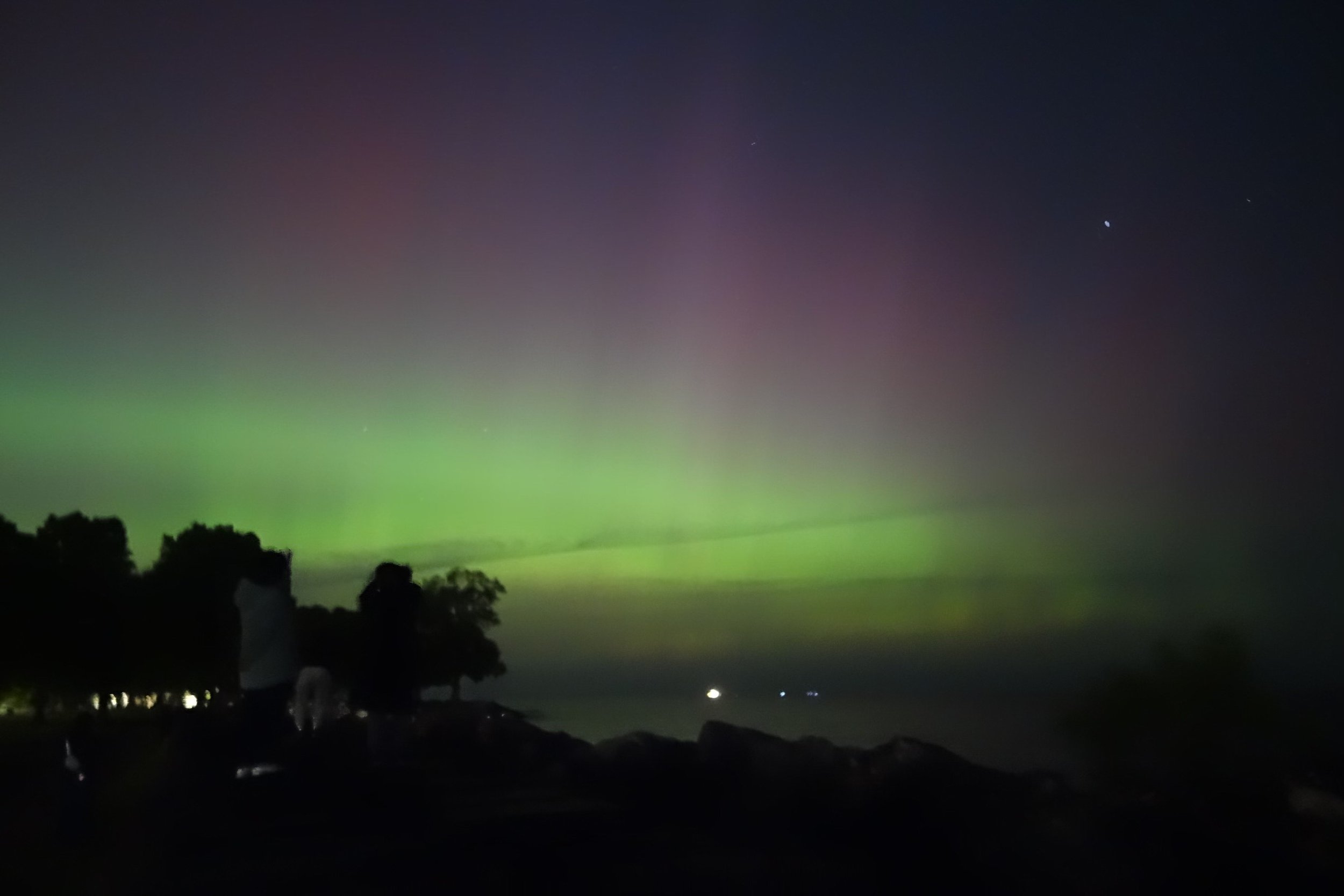
Lake Michigan, October 7, 2024 (KP - 5.67)

In the Beginning

I’ve wanted to experience Aurora Borealis for as long as I can remember. As a kid it seemed impossible, because at the time it was only visible in faraway places. I put it on my bucket list all same, and got a bit more proactive when I read places like northern MI, WI and MN would see an uptick in sightings through 2024 and into 2025.

We spent our last two family vacations chasing the lights in those states to no avail. But then, by some gift-from-the-universe miracle, they started making appearances even further south, with the greater Chicago area often “making the cut” on maps used to forecast Aurora’s nightly reach. I wound up seeing them for the first time less than a mile from my home in May. And then this past week: I saw them twice. But these sightings were by no means sheer luck. They took time, effort and – this one is especially important – patience.

Lake Michigan, May 11, 2024

I recall when they first appeared here in May, the lakefront was packed with like-minded souls on a quest to see the elusive lights. But this past week, I was the lone person at the lake, soaking in this magnificence all by my lonesome. At first I wondered if that sighting back in May had been sufficient to quell the area’s collective appetite for the lights. But then, after talking to a handful of folks, I realized most actually hadn’t seen them yet. There was a desire to but an uncertainty about how to do it, where to go, and what to expect.

I am by no means an astronomer or a meteorologist, so take this advice with a grain of technicolor salt. Suffice it to say I’ve been stalking aurora since early 2023; I’ve actively gone out in search of it on 9 occasions and only seen them on 4. But those 5 failures and 4 successes taught me a lot, and I’m happy to share in hopes of spreading the awe.

TLDR;

I go into detail on all of these below, but if you need a quick and easy guide, here you go:

  1. Pay attention to the news and monitor KP and Bz numbers.

  2. Anything over a KP of 5 can pop up in the Chicago area if conditions are just right (but the higher the KP, the better). And the more south or “negative” the Bz number, the more likely aurora is to be visible here even if the KP is hovering around 5.

  3. You need a dark, clear sky. Avoid light pollution and cloudy weather. For those in the Chicago area, this means either heading to the lake, a forest preserve with open spaces, or a nearby rural community.

  4. Make sure you’re looking to the north/northeast, at and above the horizon.

  5. It’s very unlikely you’ll see — with an unaided eye — the vibrant colors we’ve all come to recognize in photos. Instead, look for grayish white hues that don’t look like clouds and possibly (but not necessarily) have noticeable movement.

  6. When it doubt, hold up your smart phone or camera; if the lights are there, the colors will pop through a newer smartphone or camera.

  7. Be patient. Conditions need to be JUST RIGHT for the Northern Lights to make a grand entrance, and they don’t always last for long (anywhere from a few minutes to over an hour). I recommend waiting a good 1-3 hours while also monitoring KP numbers.

  8. Be persistent. You might need to go out a few times before you have any luck.

  9. Bring the comforts of home (e.g. chairs, picnic blankets, layers to stay warm, friends/family, etc.); this makes it easier to abide by tip #7.

  10. Embrace the experience, no matter the outcome.

Temper Your Expectations

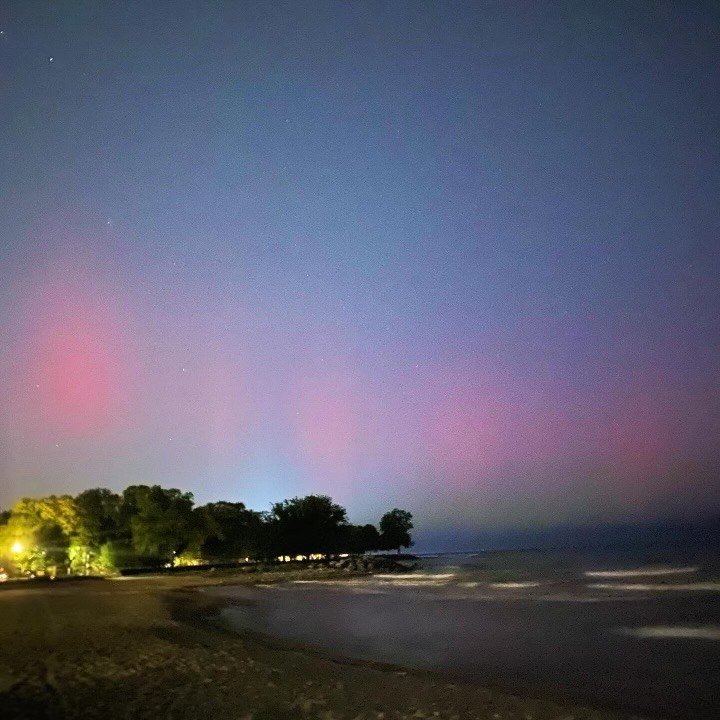
Aurora is only faintly visible here (KP - 5.33)

  • It is very unlikely you’ll see Aurora Borealis in full color without the aid of a newer camera / smartphone. This is because we’re in northern Illinois, not the arctic tundra, though I’ve read some Aurora chasers in Finland say that even there you sometimes need a camera to see all the colors.

  • It would take a very powerful storm for the full colors to be visible here without the aid of a technological device. Such a storm IS possible, but the ones we’ve been getting here require a little extra help to be fully appreciated.

  • Thankfully, many of us have all the tech we need to see the full color display in our pockets (and if you know what to look for, you CAN see the lights without the camera – the camera just helps bring out the colors we’re all expecting to see).

  • Unfortunately, seeing the full colors won’t come easy with older smartphones. My 5-year-old, 3-lens iPhone picks up the lights; my husband’s single-lens, 6-year-old iPhone doesn’t.

  • If you have an older phone that doesn’t offer night mode and/or manual controls, research camera apps that might give you that ability. There are some out there, but I haven’t tested any and so cannot vouch for them.

Research, Research, Research

Pay attention to the news but don’t rely solely on the news. If they say aurora is likely to be visible near you anytime soon, perk up and start actively monitoring the other resources I link to below. But you might also want to casually stroll through those other resources from time to time; sometimes the peaks don’t make the news.

3-Day Forecast (Link)
I use this site just to have some idea of how things are looking for the next three days. If it says the “High Latitude 3-Day Aurora Forecast” will be 7 or above, I take note. If it’s an 8 or above, I start to seriously consider re-arranging my evening plans for the day. If it’s a 9, as it was this past weekend, I absolutely do.

2-Day Forecast, With Map (Link)
Anything within the thin red line on this page is within the range of possibility. I normally use this to gauge whether or not it’s worth going out, but I have to say: This isn’t an exact science. None of it is. I mean, it’s science. Yes. But there are so many factors that determine whether or not aurora will be visible – and where, and when – that it’s important to know that sometimes we’ll be above the red line and might not see a thing. Others, we’ll be below it but might still see something. This is where monitoring KP numbers in real-time comes into play.

Real-Time Prediction (Link)

  • This website updates every 2 minutes and shows the forecast up to 14 minutes out.

  • The bigger the KP number, the better our odds of seeing some lights in the Chicago area.

  • According to the site’s own map, northern Illinois will only see lights if the KP number is a 7 or above. But I’m here to say: I’ve seen the lights 3 times, and each time the KP number was in the 5-6 range.

  • If I see the KP become a 5.33 or above, and the weather is clear and my schedule is free, I head out to try to see them.

General Data - Including Bz (Link)

  • This website contains a lot of helpful information (if you know how to read it).

  • I honestly don’t — I just use it to monitor the Bz.

  • If the Bz is a positive number and the Kp is under 5, odds are small to nil.

  • If the Bz is super negative and the Kp is close to 5 (or even under a tad), odds are decent.

  • If the Bz is super negative and the Kp is over 5, odds are good.

Local Weather

It doesn’t matter what’s happening with the sun and the resultant magnetic storms if it’s rainy, cloudy, foggy or stormy where you live. You need a mostly clear sky to have any chance of seeing Aurora Borealis.

Find a Dark Corner Near You

  • Whether you head to the lake or a rural area will depend on where in the Chicago area you live and what’s easiest/closest/safest.

  • Think of the darkest place you can go that has an open view of the northern sky and head there.

  • Thus far all of my sightings have been on the lakefront on a particularly dark beach, where I had a view of the horizon (apparently lower KPs are generally most visible along the horizon, rather than high up in the sky).

Timing is Everything

Technically the KP number is everything, but it’s important to note you’re unlikely to see the lights until a little after the sun has fully set. I keep reading things that say Aurora Borealis is most active from 12-2a, but I’ve seen them at 9p, 9:30p and 11ish.

Bring a Friend (or Two)

This kind of experience is better when shared. But even more than that: Hanging out in expansive, dark spaces can be kind of unsettling, particularly if you’re the only person there – as I was the last two times – and another lone stranger approaches.

Make Yourself Comfortable

How long you’ll be out will depend on how patient you can be (and how shy the aurora is that night). If you’ll be out for more than a few minutes, you might as well bring a few comforts from home and make a night of it. I recommend packing the following:

  • Fully charged, newer camera and/or camera phone (this is required if you want to see the full colors)

  • Lawn chairs and/or a picnic blanket

  • Flashlight (but don’t use it unless you must)

  • Water

  • Snacks

  • Wireless charger for said phone

  • Bug spray (depending on the season)

  • A hat, jacket/coat and/or gloves (depending on the season)

Know What to Look For (And Bring Your Camera)

As mentioned earlier, it’s unlikely (but not impossible) you’ll be able to see the lights in all their glory with your naked eye in the Chicago area. So what exactly are you looking for?

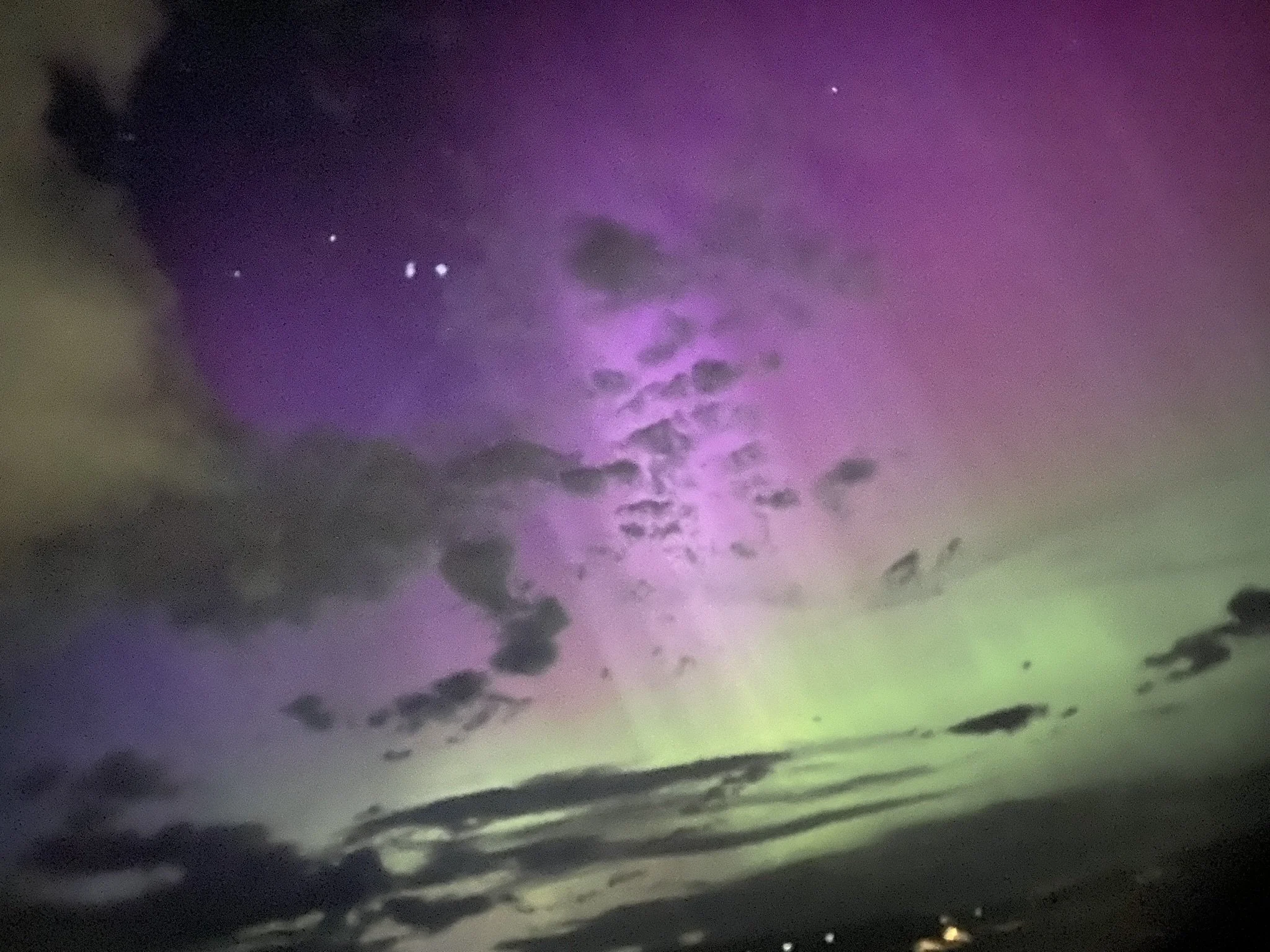
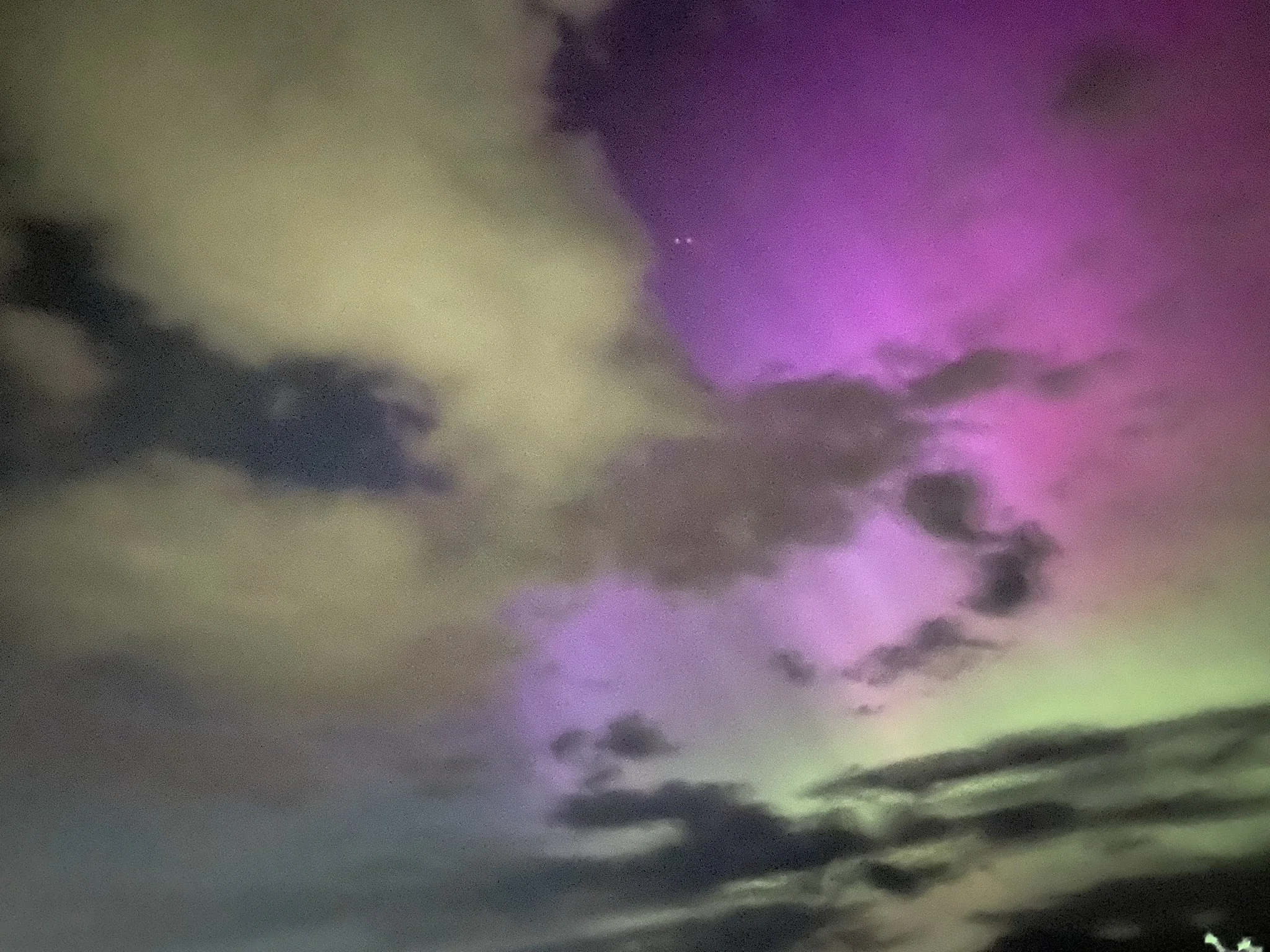
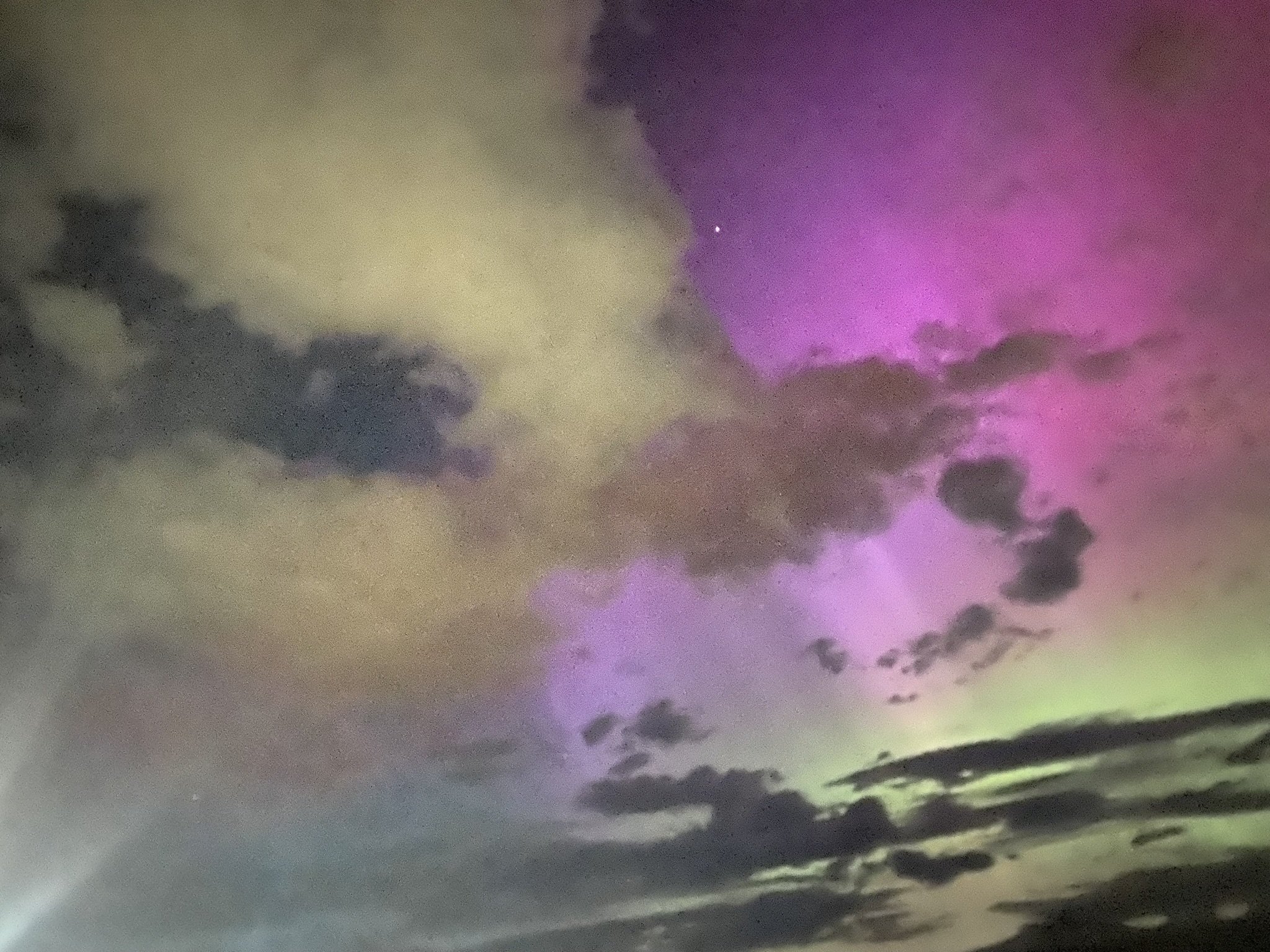
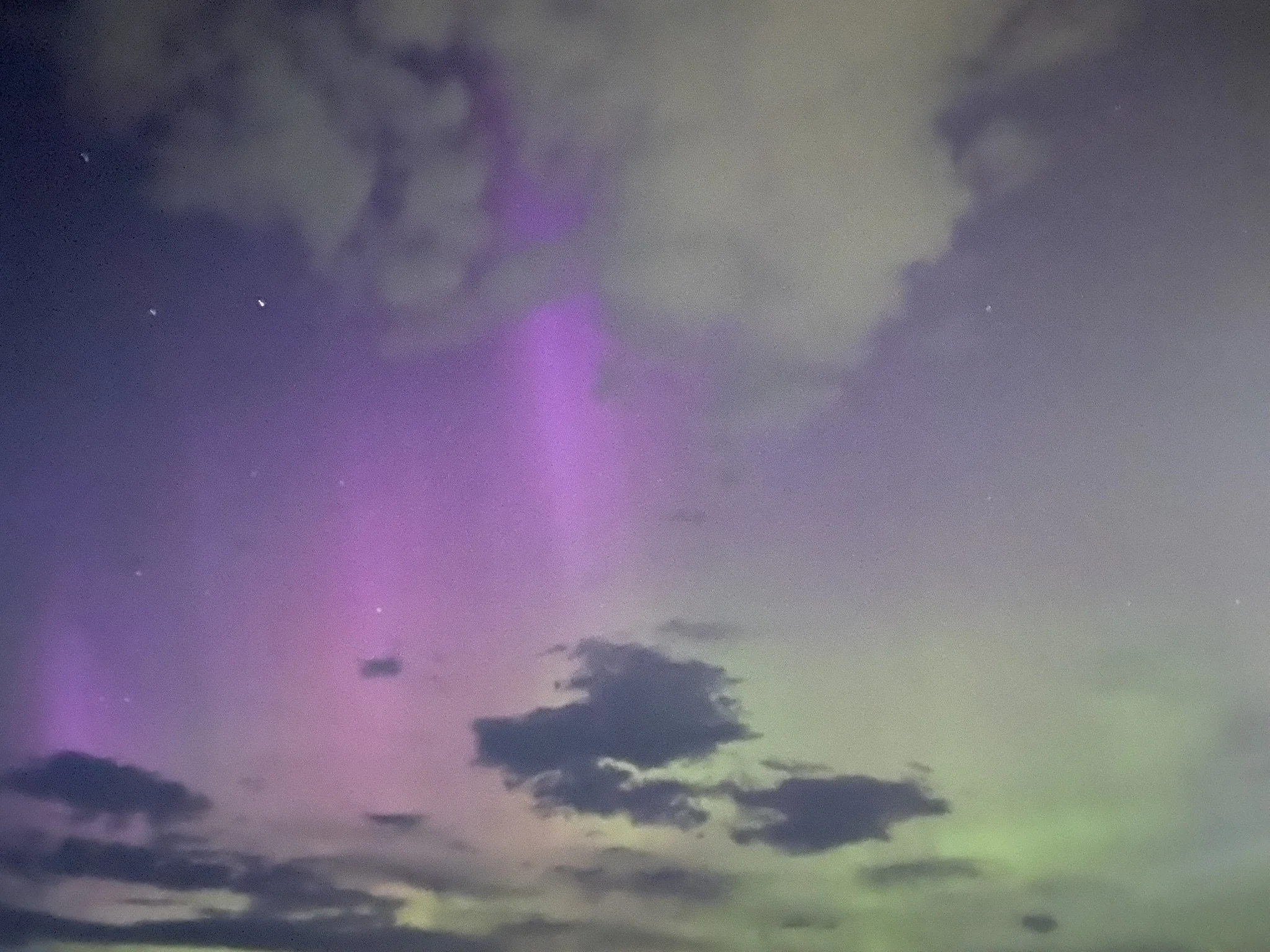
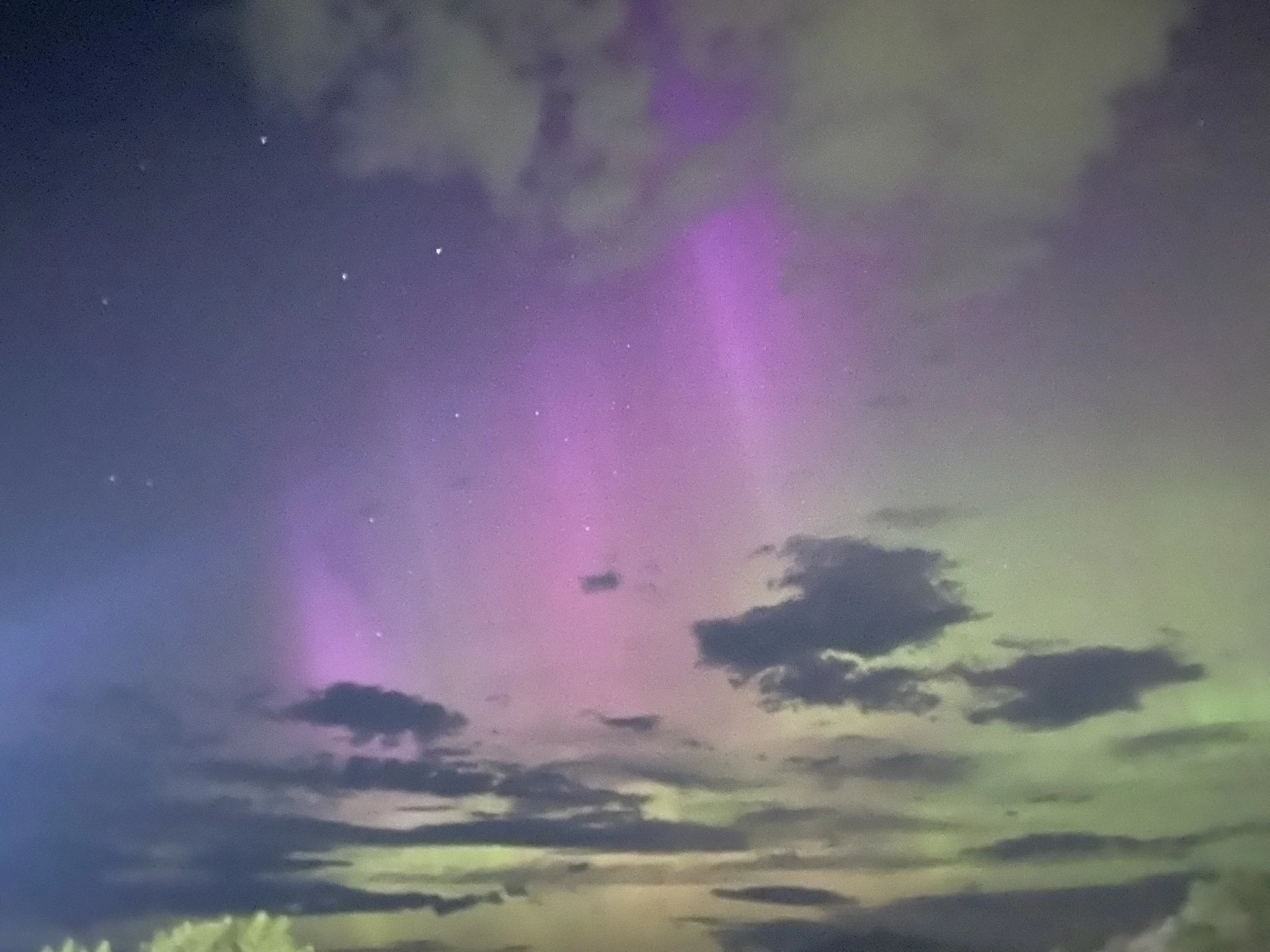
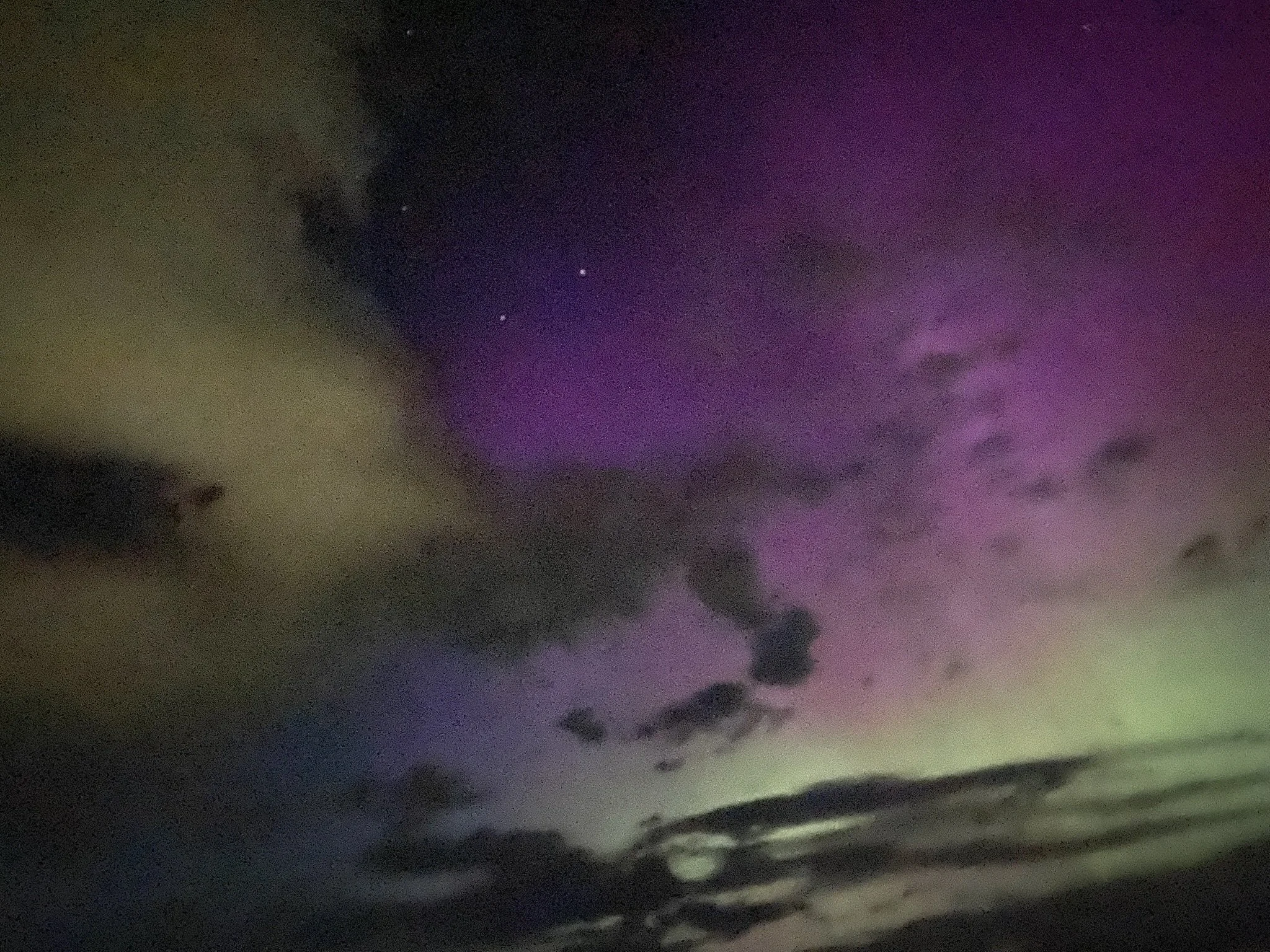
The rosy hues here appeared as unusual color blocks that were barely visible to the unaided eye (KP - 5.33)

  • Make sure you’re looking to the north (on the horizon or above), but note that if you’re along the lake you’ll see a bit of them over the lake, too.

  • Be on the lookout for a grayish white presence or any other changes in the sky’s “natural” hue. These can be super subtle and easy to miss. You might notice them moving in an unexpected way (but they also might move so slowly that you don’t notice).

  • For one of my experiences, my clue that something was happening was that the darkest parts of the sky seemed to have somehow gotten even darker (with the deepest of purples just barely evident over the horizon). When I held up my camera, that darkness turned into a brilliant fuchsia.

  • For my other two experiences, I could actually see the lights appear and move, swirling about in some places and staying seemingly still in others – they just weren’t in full color. Much of the lights were a greyish white to the naked eye, but there were other shades too. I just couldn’t make them out until I held up my camera and let out a sigh. IT’S SO PRETTY, Y’ALL.

Patience is a Virtue

As I said, I’ve actively sought out the lights on 9 occasions and only seen them on 4. Each trip was 1-3 hours and involved lots of waiting, observing, monitoring the KP numbers and – yes – holding up my camera to fact check my eyes.

Prepare to Be Disappointed

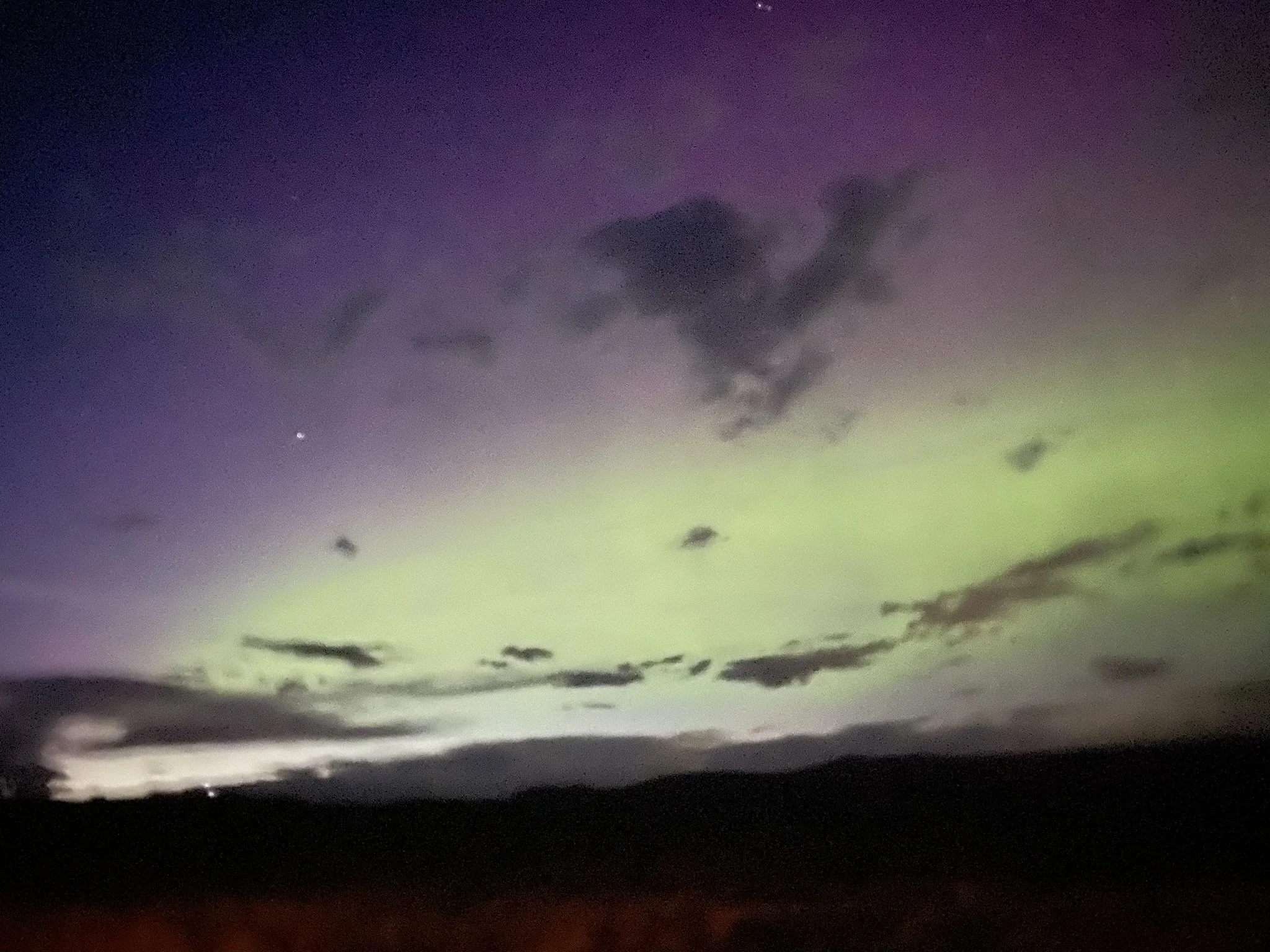
Lake Michigan, Oct. 7, 2024 (KP - 5.67)

I’ve been out when the KP number was a 7 – which is supposed to be a sure thing on a clear night for this area – but I saw nothing. I’ve seen an 8.33 be super faint (because the bulk of the particles were pushed further east). I’ve seen them appear and disappear in under 5 minutes (though on 3 occasions, they were visible for 10-30 minutes). Point being, some nights they’re there when the odds are low, and not there when the odds are high. You might go out and not see a single thing. Or you might wait an hour and see everything. That’s part of what makes these lights – and the experience of seeing them – so darn special.

In Sum

Discovering these displays of celestial magic can be a bit of a time commitment, so make the most of it. Go some place where you’ll be happy to just sit and observe and commune with the universe – and whichever friends or family you take with you – for a while.

You might not see it on the first try. It might take a few hours, or you might need to pack up and try again some other day.

But trust me when I say it’s worth the effort.

Things Forgotten

One of the best gifts I’ve ever received is little more than an inch long, a fragile thing made of metal and plastic. It arrived on my doorstep two weeks ago, the hard work of a cousin who spent the last several months converting old family reels into digital files.

I knew so very little of my father’s childhood. His mom died when he was a little kid, and his dad passed not long after my father went away to college. What I knew of the years in-between was a very sad time, coping with the loss of his mother and dealing with an abusive stepmother.

My dad spoke of it sparingly, but he would occasionally make the passing remark about how he wished his dad was still around. About how he wished he’d had a chance to meet my siblings and I. I knew he played the saxophone in a band. I knew he was a railroader who was away from home a lot, and he eventually kicked out the woman when he realized how badly she was treating his three youngest kids. I knew he sometimes took my dad and his brothers on trips to lakes “up north” but never realized how frequent or full of joy those trips were (nor how far away they sometimes traveled to get there). I never knew he was the source of my dad’s silly demeanor until I saw him wipe away fake tears and pretend to be devastated when my dad was leaving for college.

Or perhaps he wasn’t really pretending.

All of my childhood, I would hear about these old family reels, tucked away at my dad’s brother’s house. But we never got to see them. Never got to see my grandfather smiling and laughing. Never got to watch this footage with someone who was there (my dad passed away three years ago, as did the brother who had these reels).

It’s been a rough three years. So much death I can hardly stand it. And most recently: a beloved aunt who was like a second mom to me passed away on Christmas.

This past week when everyone was waiting to learn whether or not a groundhog would see its shadow, I whispered a “happy birthday” to her and told her I missed her. Like all of these other recent losses, she was gone too soon. The life expectancy is dropping, and I’m seeing the data that proves it in real time. In real life.

And then we had another bittersweet day yesterday: my dad’s birthday. I had a few reasons to make a trip home to Indiana — baby hand-me-downs for a family member, a birthday present for a niece, etc. What better weekend to plan the trip than on my dad’s birthday? My entire life, no matter where I lived, I made it home for his birthday (or called that day and visited soon thereafter).

As luck would have it, we wound up staying in a lake house “up north” thanks to a friend and her kind family. It was our first time visiting this town and this lake, but being there reminded me of the reels: Was this one of the many lakes he visited with his brothers and their dad? Had they ever stood where I was standing?

I will never know for sure, just as I will never know the names of most of the people in these reels. But I know they are smiling; laughing; enjoying life. I can see they loved my father. That he was happy.

And that, as it turns out, is enough.

The Missing Pieces

image8_0002.jpg

It’s been a year.

12 months since I last heard my mother’s voice. 

365 days since I last felt an iota of hope.

I marked the occasion at her home, where I’ve spent the last few months digging through boxes, unearthing parts of my parents that had been tucked away for decades. I’m realizing that as much as I love and miss them, the fact remains that I knew them first and foremost as my parents, and not entirely as the people they were.

I’ve found a treasure trove of letters my mom saved from her time as a school bus driver: notes from students telling her how much she meant to them. Because of her kindness. Because of the interest she showed in their lives.

I’ve found old report cards and citizenship awards: some moldy and ragged at the edges.

I found invitations to their wedding, cards from those who attended and endless mementos whose significance I will never have the chance to understand.

I’ve found photos of them young, happy, smiling: photos of them together, photos of them with family, with friends.

I saw my paternal grandfather’s handwriting for the first time in one of my dad’s high school yearbooks: a brief message that made it clear he believed my dad would be the first in their family to go to college. He lived just long enough to learn he was right.

Elsewhere in the book was a message from my father’s youngest brother. He also died in 2020: just three months after my father and three months before my mother. He was in junior high when he scrawled his message: TO MY DUMB BROTHER.

I laughed out loud when I read those words, knowing that was likely the closest they ever came to swapping terms of endearment.

In other boxes, less pleasant memories – ones I witnessed in real life and in full horror – are also to be found. Old test results. Brain scans. Liver scans. Half-empty pill bottles. Unfinished crossword puzzles.

And the part that really stands out to me — the part I don’t fully understand — is that I feel the same gut punch whether I’m opening a box full of sad memories, or a box full of happy ones.

They are all pieces to the same bittersweet puzzle: a reminder of hope reduced to ash. A reminder of life’s frailty and time’s cruel passing. A reminder of those we are missing.

A reminder that, when they were here, our puzzle was complete.

And the realization that it never will be again.